

 Tiếng Việt
For decades, PET (Polyethylene Terephthalate) and HDPE (High Density Polyethylene) have remained the two most widely used plastics in the packaging industry. PET stands out for its transparency, lightweight nature, food-contact safety, and ease of molding. Meanwhile, HDPE is highly valued for its mechanical strength, chemical resistance, and ability to preserve sensitive products such as cosmetics and pharmaceuticals.
Their diverse applications—from bottled water and cosmetic packaging to food containers and medical supplies—have enabled PET and HDPE to dominate global market share. With widespread adoption, advanced production lines, and the capability to meet strict market requirements, PET and HDPE are regarded as the “backbone” of the plastic packaging industry and are expected to continue playing a leading role for at least the next decade.

Nội dung chính
Outstanding Properties That Are Hard to Replace
One of the main reasons PET and HDPE continue to dominate is their superior physical and chemical properties, which are difficult for other materials to fully replace. PET is transparent, lightweight, durable, and offers just the right level of gas barrier, making it ideal for the food and beverage industry. Meanwhile, HDPE is thicker, UV-resistant, and highly solvent-resistant, making it especially suitable for creams, pharmaceuticals, and household chemicals. Both plastics are highly versatile in manufacturing—ranging from small bottles of just a few milliliters to multi-liter containers, with designs that can be round, square, or custom-shaped.
In addition, the cost of PET and HDPE remains relatively competitive compared to alternatives such as glass, aluminum, or bioplastics—which are still expensive and limited in mass production capabilities. This balance of cost, quality, and functionality has allowed PET and HDPE to sustain their long-term advantage.
Recyclability and the Circular Economy Trend

Another key reason PET and HDPE continue to lead is their efficient recyclability. PET is one of the most widely recycled plastics globally, producing rPET (recycled PET) that is used in food packaging, cosmetics, and textiles. HDPE is also easy to collect, sort, and recycle into new products such as bottles, pipes, and pallets. As countries—particularly the EU, the US, and Japan—tighten environmental regulations requiring businesses to switch to recycled materials, PET and HDPE emerge as ideal solutions for the circular economy.
With a well-developed global recycling infrastructure, these two plastics hold a distinct advantage over newer materials. This means that in the next 10 years, PET and HDPE will not only maintain their dominant role but also serve as the foundation for sustainable and eco-friendly packaging development.
Flexibility in Adopting New Technologies
Compatibility with modern technologies is another reason PET and HDPE sustain their strong position. Advanced packaging innovations such as digital printing, QR code and NFC integration, airless pump designs, or unique 3D shaping can all be applied to PET and HDPE. Moreover, with the rise of hybrid materials, PET and HDPE can be enhanced with special barrier coatings to improve gas resistance and extend product shelf life.
Many cosmetic brands have already adopted high-quality recycled materials like food-grade rPET and recycled HDPE for products exported to premium markets. Thanks to this adaptability, PET and HDPE not only meet current demands but are also ready to embrace the trends of smart and sustainable packaging in the future. This is a critical factor that ensures these two materials maintain their dominant role in the next decade.
The Role of NBT Plastic in the Future of Packaging
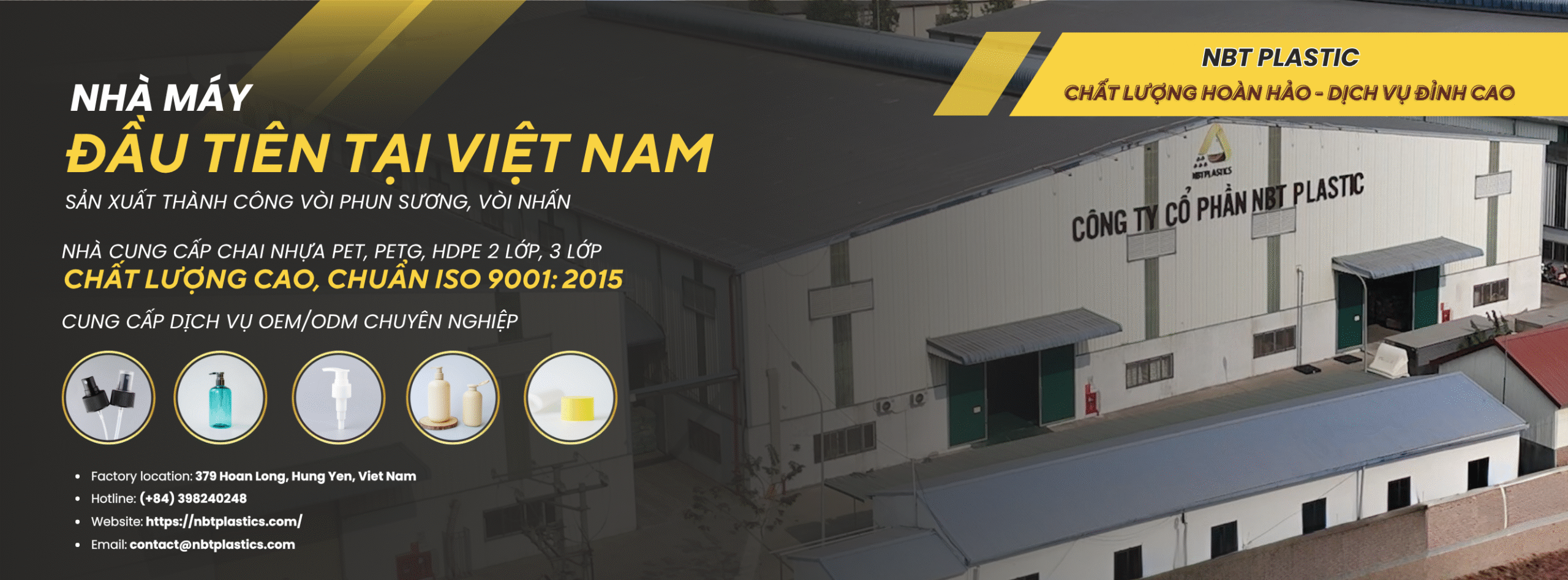
From the above analysis, it is clear that PET and HDPE will continue to be the dominant packaging materials for at least the next 10 years, thanks to their balance of cost, functionality, sustainability, and technological adaptability. This is not only a safe choice for businesses but also a strategic solution to meet the stringent demands of global markets.